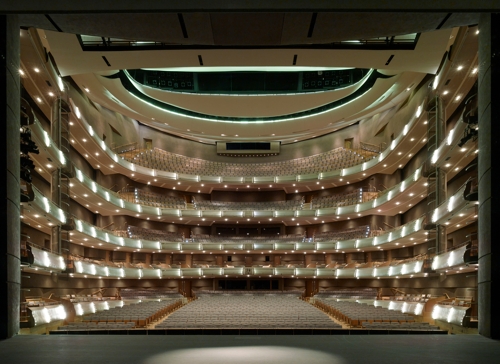
Where the COC goes to play
(Photo: Tim Griffith, courtesy COC)
Tale of Two Cities
LâOpera de Montrealâs premiere of Il Trovatore the same day Torontoâs Canadian Opera Company premiered Tosca highlighted some striking differences - and similarities - between Canadaâs two leading opera companies
by Richard Burnett
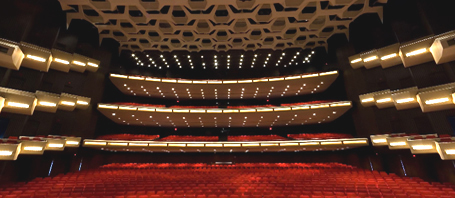 |
| (Photo courtesy Place des Arts) |
Iâve been writing about opera and interviewing opera stars for about a decade now, though I still donât consider myself an opera expert by any stretch of the imagination. So I learnt a lot by attending two operas last week, the opening performance of the Canadian Opera Companyâs production of Pucciniâs masterpiece Tosca at Torontoâs gorgeous Four Seasons Centre for the Performing Arts, and LâOpera de Montrealâs solid production of Verdiâs classic Il Trovatore at the venerable Salle Wilfred-Pelletier in Montreal.
The reviews for both productions are in and both fared well.
Both premieres were on the same day (January 21), so I attended the second performance of LâOdeMâs Il Trovatore a couple days later (January 24). The reviews for both productions are in and both fared well. Montrealâs own Arthur Kaptainis wrote in The National Post, “The Canadian Opera Company mounted Pucciniâs potboiler mostly according to the playbook and sent the crowd home happy.” The Toronto Star gave it three out of four stars, noting about the Torontonian soprano playing the title role, “Adrianne Pieczonkaâs Tosca [is] the best thing in COCâs production of [the] Puccini classic.” (Incidentally, Pieczonka made her professional debut with the COC in 1988 and this homecoming performance was much-anticipated.)
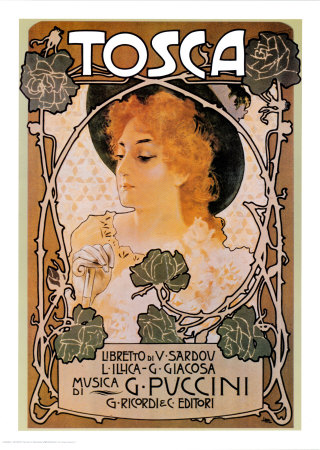
The Charlebois Postâs own Axel Van Chee mostly enjoyed Tosca, pointing out, “Pieczonka has delicious low and exhilarating high ranges that sometimes get the better of her.” I found Pieczonka to be a little shrieky but enjoyed American baritone Mark Delavan as the evil Scarpia (my opera companion - my mom Liliane - has seen Tosca performed live several times over the years and thought Delavanâs Scarpia was the best sheâs ever seen). The crowd clearly enjoyed Delavan, who happily encouraged the lusty boos when he took his final bow.
Over in Montreal, audiences packed Salle-Wilfred-Pelletier to see Il Trovatore (nothing sells out a house quite like one of the old Italian standards, which audiences still demand to see). The Gazette fell in love with Korean tenor Dongwon Shin in the title role of Manrico. “His is the most exciting local tenor performance since Salvatore Licitraâs 2004 recital,” critic Wah Keung Chan wrote.
Now thatâs very high praise - I also saw Licitra in Montreal in 2004 when he was poised to become the successor to Pavarotti whom, incidentally, I was also privileged to see perform live in Montreal a couple of years earlier, in February 2002. Sadly, Licitra passed away last September 5 after sustaining severe head and chest injuries when he suffered a cerebral hemorrhage when he crashed his motor scooter into a wall in Donnalucata, Sicily. He was just 43.
In my own Il Trovatore review for The Charlebois Post I pointed out the obvious: Even amateur opera fans will recognize many of the songs in Il Trovatore because it has been known as the opera with hits since its debut in 1853. LâOdeM hired an ensemble of four top-notch leads - Canadian baritone Gregory Dahl as the Count di Luna, Italian mezzo Laura Brioli as Azucena, Korean tenor Dongwin Shin as Manrico (I thought his golden voice really warmed up in the second half), and Japanese soprano Hiromi Omura (read my Charlebois Post interview with Omura by clicking here) - and they sent Montreal audiences home very happy.
Still, while the music and vocals were top-notch, I didnât care much for the pedantic staging and minimalist - even rudimentary - sets recycled from LâOdeMâs 1998 production.
And this is what LâOdeM and the COC have in common: They are perpetually strapped for cash.
Who knows, Montrealers may have to wait another 15 years before LâOdeM presents Il Trovatore again - unless you head down the 401 to Toronto to see the COC launch its 2012-2013 63rd season with its own production of Il Trovatore. (Purely as an aside, Tosca - which continues at the COC until February 25 - was also the first opera LâOdeM ever presented, back in 1980.)
What LâOdeM and the COC do not have in common are the acoustics and sightlines of their respective halls. Torontoâs Four Seasons Centre for the Performing Arts is the new home for both the COC and the National Ballet of Canada; its horseshoe-shaped R. Fraser Elliot Hall was built with superior acoustics as its first priority. Each of the theatreâs 2,071 seats were computer-tested for optimal sightlines to ensure an unobstructed view for every member of the audience. To be honest, I thought the hall was much smaller than it is. In fact, I thought it was half the size of Montrealâs 2,990-seat Salle Wilfred-Pelletier which - lets face it - doesnât have the best acoustics.
But Salle Wilfred-Pelletier has a different kind of grace - and a grander lobby - dating as it does back to 1963, a bridge between the glorious theatres built before WWII and the current generation of often soulless state-of-the-art halls like Torontoâs R. Fraser Elliot Hall (inaugurated in 2006) and the OSMâs La Maison symphonique de Montréal (inaugurated in September 2011).
Without being elitist, I also found the Toronto audience to be sharper dressers - Iâve always enjoyed dressing up to go to the opera - and I was deeply annoyed and frustrated at the nonstop coughing and sneezing by the Montreal audience during Il Trovatore. Mind you, it was mild with no snow on the ground in Toronto, and Montreal ranks as one of the coldest and snowiest winter cities on the planet.
But, damn it, if youâre sick stay home.
LâOdeM wind down their solid 2011-2012 season with their production of Gounodâs Faust, from May 19-26. Meanwhile, the COC still have another whopping four productions after Tosca ends its run on Feb 25: Love From Afar (Feb. 2-22, 2012), The Tales of Hoffmann (April 10 to May 14), A Florentine Tragedy / Gianni Schicchi (April 26 to May 25) and Semele (May 9 - 26).
I love going to the opera. I once deliriously attended an opera in 2007 at Viennaâs famed State Opera House (or Staatsoper) which was built by gay architect couple Eduard van der Null and August Sicard von Sicardsburg in 1868. The Staatsoper presents a different opera pretty much every single night of the week year-round and - with its elegant dress code (informal is permitted in standing room) - delivers a night of romance.
The Canadian Opera Company and LâOpera de Montreal may not have the budgets to present opera year-round, but they do offer their audiences a little romance in a world that sure could use some more.
OOO
 |
| Deir |
 |
| Bavaro |
Final note: My hearty congratulations to Montreal actor Antonio Bavaro, nominated for for Myentertainmentworld.caâs 2011 My Theatre Awards for Best Performance in a Reading for his work in Puelo Deirâs Holy Tranity at the 2011 Toronto Fringe Festival.
You can read my Three Dollar Bill interview with Bavaro about his other 2011 critically-acclaimed performance, in Hedwig & The Angry Inch at the Montreal Fringe Festival, by clicking here.
You can also read my Charlebois Post interview with Puelo Deir about Holy Tranity by clicking here.
0 comments:
Post a Comment
Please read our guidelines for posting comments.