In a Word... Anthony F. Ingram on Uncle Vanya
From The Darkness, Vanya
by Gaëtan L. Charlebois
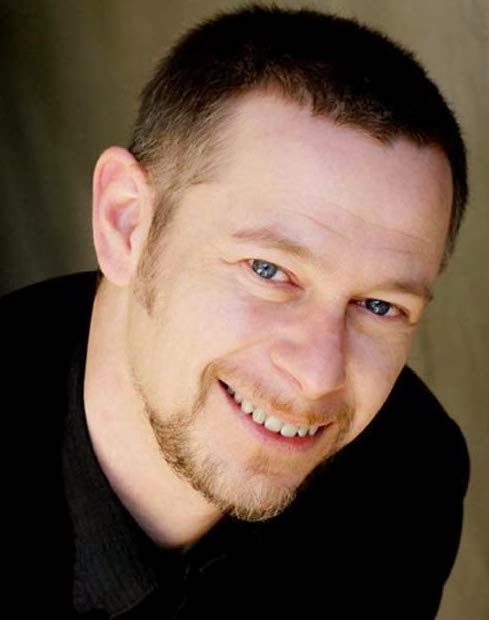
Anthony F. Ingram is Vancouver born and bred, having lived away from his hometown a total of one year out of 47 when he trained and worked at the Stratford Festival in Ontario. In addition to that training, he is a graduate of University of British Columbia and Studio 58. Ingram has received numerous Jessie Richardson Theatre Award nominations as a director and actor. In 2010, he won Best Actor for his performance as a serial killer in Frozen (Shameless Hussy Productions). Ingram has toured across the country with a number of theatre companies and has played in San Jose, California with Electric Companyâs Brilliant! The Blinding Enlightenment of Nikola Tesla. Mr Ingram previously appeared in Blackbird Theatre productions of The Birthday Party, Pinterâs Briefs, Great Expectations, and Waiting for Godot.
CHARPO: I'd like to get right into the meat of this interview: discuss the character of Uncle Vanya, his profound sadness (read: depression) and how you are bringing your own personal experience into the production. Tell me about shaping the character.
INGRAM: Well, itâs really quite funny, because after a reading of the play around a table, we all got into a discussion about the fact that Astrov is essentially a proto-environmentalist. And Robert (Moloney) who plays Astrov, has done stuff with Green Peace and is a vegetarian (I think) and quite politically attuned particularly about human rights and the environment, and, in the middle of this discussion, I turned to John Wright (the director) and whispered to him, “Robert is Astrov”. And John looked at me and said, “Yes. But you are Vanya”. And John was right: I get very upset about human rights abuses and the destruction of the environment and the destruction of Canada by particular politicians, blah blah blah... but at the same time - Iâve kind of given up on signing surveys, attending rallies, and such because, really, whatâs the point? It seems to me that we human beings have somehow convinced ourselves that we are particularly special and that it will be a tragedy of universal proportion if we vanish from the face of the earth. Horribly arrogant, in my opinion. My melancholic nature prompts me to just accept the fact that weâre all on this ride to Hell in a very pretty hand-basket. And I think that Vanyaâs depression really manifests itself in his frustration at whatâs going on around him and his inability to do anything about it. He sees his past as a waste, his future as pointless. And, these are things that I completely identify with. Vanya and I are both 47. I was, quite seriously, shocked to reach the age of 30. Now Iâm 47 and Iâm thinking, “so, now what? I just keep going? Someone please tell me that it will end at some point, and end quickly when it does, because I donât know how long I can keep entertaining myself like this”. These people who have “life-goals” - I just donât get them. So, really, if Iâm doing this (the play) right, I shouldnât have to worry too much about shaping Vanya, we seem to fit hand-in-glove. Hopefully, all I have to do is learn the lines and not bump into the furniture.
CHARPO: Do you think there are aspects of actors'/creators' lives which we keep guarded - which we forbid from bringing into our work?
INGRAM: Well, of course. Weâre no different from anyone else in that respect. You donât expect a doctor or plumber to let their marital or psychological problems affect their work. Actors are no different, in that respect. That being said, however, we (actors) are in most cases trying to represent real people on stage. We can, and do, often use our own life-experience as touchstones in trying to understand the characters we portray. I think we have to be able and willing to relate our own experience to, and through, our work. This doesnât mean we have to tell everybody - kind of like a footnote - that “this is my life youâre seeing on stage”. In fact, no one should be able to tell whether you and character have lived through the same thing - they should just see the character. But, for me, I canât help but bring my life experience to what I do, whether itâs as an actor or director. In the rehearsal room, nothing is off-limits, as far as Iâm concerned. My fellow actors have heard some of my deepest, darkest secrets - and I hope theyâve forgotten them.
CHARPO: You are being open about your experience. How important is it for artists to be out loud about illness and its relation to their work?
INGRAM: I donât know that itâs important. Artists do tend to get maligned for doing it. Society seems to think that musicians and actors have little or no business talking about real-life issues outside of their professional capacity. Itâs so easy to dismiss someone like Ronald Reagan, for instance. I mean really, what sane country would elect an actor for its president? He shared scenes with a monkey, for pityâs sake! While I completely disagree with most of Reaganâs policies, I see no other reason why he shouldnât have been presidential material. Artists are expected to deal with real life issues in their art. Otherwise, what is art for? But, a funny thing tends to happen when artists talk candidly about life/death issues outside of their art: for some reason we get dismissed. The simple truth is that society does give us - actors, musicians, artists in general - access to mediums of communication otherwise unavailable to other people, and I donât see any reason why we shouldnât use those media to speak up for those who canât; particularly about issues that are critical. But we have to be responsible about what we say. Some ‘famousâ people have done great harm - what we say through these media should be looked at as critically as what any other person may say. One hopes to be able to address such issues with the work one does. I was fortunate to tour a show across Canada called “ICE: beyond cool” which dealt directly with teen-suicide and had the specific goal of raising awareness about an issue that is responsible for most of the teen deaths in our country and I felt deeply honoured to be able to work on a show that spoke about my suffering in such a specific and smart way. But, the longer Iâve lived with my depression, the more mis-information Iâve heard about it. I find myself compelled to talk about it, correct errant information - all this on a personal level. As for public discussion, I find myself open to it, willing to talk about it when asked because, well, so many of us who suffer silently think weâre alone and if Iâve got a channel through which to reach someone who is crippled with depression, self hatred, and thinking that the only answer is to off themselves, I think - well, my compassion and knowledge of the pain compels me to use that channel to reach out to them.
CHARPO: As a fellow sufferer of depression, I often feel that work helps me blaze through the particularly dark days - have you found that too?
INGRAM: Absolutely. When I was first diagnosed with clinical-depression I was doing my theatre training at Studio 58. I was in rehearsal one day and it dawned on me that the only time I felt “not un-happy” was when I was on stage. Itâs funny. For me, I feel anonymous when Iâm on stage - I suppose itâs like Iâm wearing a mask and no-one can tell itâs me, so Iâm suddenly free of all the judgments that I imagine are hurled at me when people can see me. Suddenly, I can do just about anything. And once Iâve done those things, I can slink off to my dark corner and hide. They say “idle hands are the devilâs playground”. And I think work is a great way to stay out of the demonâs grip; itâs just that sometimes you donât have work. Itâs only very recently - after over ten years of therapy - that Iâve been able to survive that interminable gap between employments without being completely overcome with the darkness.
CHARPO: Now, here's a more prickly one: Uncle Vanya is often treated as pure comedy - how do you and your director handle that line because, let's face it, the chronically sad can be used comically (off the top of my head I think of SNL's Debbie Downer)?
 |
| @gcharlebois |
INGRAM: Itâs odd that you say that, because Iâve never seen it as pure comedy and I donât think John sees it that way, either. In fact, I donât see Vanya in any way related to Debbie Downer, at all. If anything, Vanya is the most sane person on the stage. I see all the other characters as deluded and distracted. If Vanya is driven to distraction, itâs because no-one else in the house will face up to the reality that, despite all their little projects and plans, theyâre all going nowhere and getting there extremely quickly. And, I think thatâs where the comedy is. Here you have this guy who is mortally depressed, just trying desperately to hold on to something solid, while everyone around him is happily pursuing illusory goals and heâs pushed to dire methods to bring them all back down to earth. In a way, heâs analogous to Jaques from “As You Like It” - a classic melancholic whoâs searching for his place in the world and finding the things that everyone else is doing to be pointless and, in fact, insane. I mean, even if you look at it from a classical definition of comedy - itâs exactly the opposite. In classical comedy, the old man loses the young girl to the young man and, thus, everything is put right with the world. Here - that doesnât happen! So, I think anyone who plays Uncle Vanya as pure comedy has completely misread what Chekov was aiming at. I hope weâre a little closer to the target than that.
Uncle Vanya runs from December 23-January 18

No comments:
Post a Comment
Please read our guidelines for posting comments.